

For centuries, the ancient practice of yoga has captivated the minds and bodies of countless individuals, transcending cultural boundaries and offering a profound path toward harmony and self-discovery. While the physical postures and breathing techniques have long been revered for their ability to cultivate strength, flexibility, and overall well-being, the true essence of yoga extends far beyond the realm of the physical.
As Western science continues to explore the intricate workings of the human body and mind, a remarkable convergence is unfolding. Scientific investigations are uncovering tangible evidence that validates many of the principles and benefits long proclaimed by the ancient yogic traditions. This newfound understanding not only reinforces the profound wisdom embedded within these practices but also unveils a world of possibilities for enhancing our collective well-being.
At the core of yoga lies the concept of self-regulation, a profoundly empowering principle that enables individuals to exert control over their internal stress response and emotional equilibrium. Through the cultivation of mind-body awareness and the practice of mindfulness, yoga practitioners develop an innate ability to navigate the ebb and flow of thoughts and emotions, fostering resilience and equanimity in the face of life’s challenges.
Modern neuroscience has shed light on the remarkable effects of yoga on the brain, revealing its capacity to reshape neural pathways and alter brain structure itself. Neuroimaging studies have demonstrated that meditative practices can modify brain activity in specific regions associated with attention, emotion regulation, and stress management. Furthermore, the molecular biological approach has uncovered evidence that yoga can influence the expression of genes, enhancing immune responses and downregulating inflammation – a testament to the powerful mind-body connection.
One of the most profound discoveries lies in the realm of breath control, or pranayama. Western science has verified the ability of yogic breathing techniques to modulate the sympathetic nervous system, the messenger of the stress response. By consciously regulating the breath, practitioners can effectively lower blood pressure and bring the body into a state of relaxation, harnessing a powerful tool for stress management that can be applied both on and off the yoga mat.
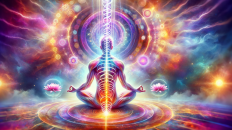
Yet, the true essence of yoga extends beyond the physical and mental realms, delving into the realms of energy and consciousness. While current scientific instruments may not yet possess the capability to measure the subtler aspects of yogic philosophy, such as the flow of internal energy or the existence of chakras, the transformative power of these practices on individuals’ lives and well-being cannot be denied.
Yoga offers a profound path to self-realization, a journey of uncovering the truth of one’s innermost being. It is a practice that transcends the boundaries of physical and mental well-being, inviting practitioners to embrace their interconnectedness with the world around them and ultimately, to contribute to the betterment of society and the planet.
As science continues to unravel the intricate mysteries of yoga, a renewed appreciation emerges for the ancient wisdom that has guided countless individuals toward self-discovery and inner peace. The marriage of modern scientific exploration and ancient yogic traditions holds the promise of unlocking new frontiers of human potential, fostering a deeper understanding of ourselves and our place in the vast tapestry of existence.












Add comment