
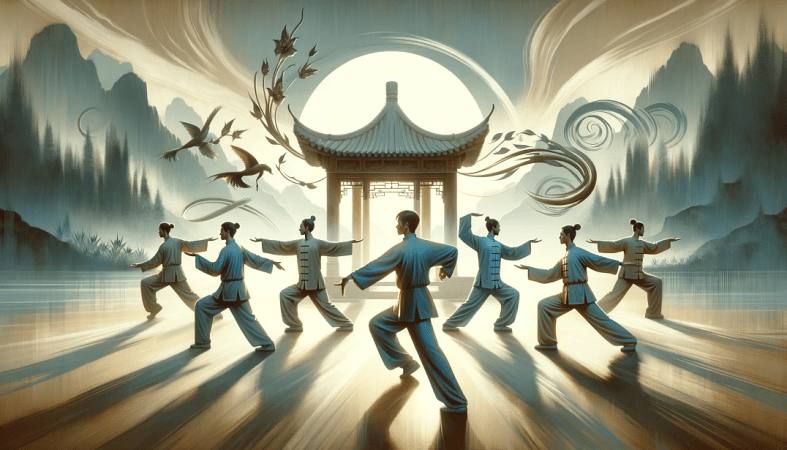
Tai Chi, a martial art known for its defense techniques and health benefits, is a gentle form of exercise that involves a series of movements performed in a slow, focused manner accompanied by deep breathing. Tai Chi is often recognized for its ability to reduce stress and help with a variety of other health conditions. Originating in ancient China, it has evolved over centuries and branched out into several styles, each with its own unique characteristics and emphasis. Here, we explore the most prominent types of Tai Chi:
1. Yang Style
Yang style is the most popular and widely practiced style of Tai Chi in the world today. It is known for its gentle, steady, and expansive movements. The Yang style’s graceful flow and slow motion are suitable for beginners and offer health benefits such as improved balance, circulation, and alignment. Its most famous sequence, the 24-form set, is practiced globally.
2. Wu Style
Wu style is characterized by smaller, more compact movements, making it more accessible to individuals of all ages and health conditions. It emphasizes precision and control with a greater focus on internal development. Practitioners of Wu style often concentrate on the subtle transfer of weight and the integration of the mind with the body.
3. Chen Style
Chen style is the oldest form of Tai Chi and is known for its lower stances, explosive power, and fast movements interspersed with slow motions. It’s more physically demanding and includes a unique feature known as “silk reeling,” a spiral force used throughout the body. Chen style is suitable for those looking for a more vigorous workout and interested in the martial arts aspect of Tai Chi.
4. Sun Style
Sun style is a relatively newer form of Tai Chi and incorporates unique stepping movements. It is known for its smooth, flowing movements that have a higher stance and less obvious weight shifting, making it particularly gentle on the knees and back. Sun style integrates elements of Qigong, making it distinctive for its healing focus.
5. Hao Style
Hao style is less common and known for its small, subtle, internal movements. The focus is primarily on internal energy control and development. It is considered more advanced and is usually pursued after mastery of other styles. Practitioners of Hao style Tai Chi often emphasize the mental aspect and internal strength development.
Conclusion
Each style of Tai Chi offers a different emphasis, ranging from health and meditation to martial arts techniques. While they all share the common principles of Tai Chi, including the cultivation of qi (life energy), smooth and rounded movements, and mental concentration, the choice of style may depend on personal health goals, physical condition, and interest in the martial arts aspect of Tai Chi.
Regardless of the style, practicing Tai Chi regularly can lead to improved balance, better health, and a sense of well-being. As an art, Tai Chi is continually evolving, and its various styles ensure that it is accessible and beneficial to people of all ages and lifestyles. Whether you seek a gentle form of exercise, a meditative practice, or a martial art, there is a Tai Chi style that can fit your needs.













Add comment