
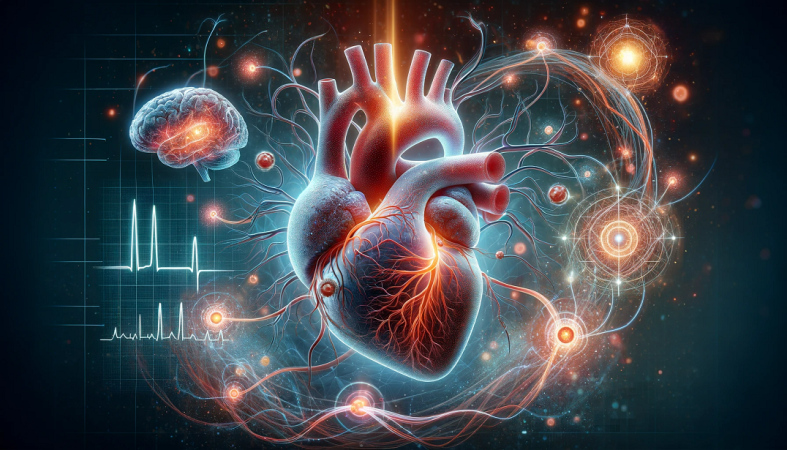
Recent scientific discoveries have revealed a fascinating aspect of the human heart: it contains its own network of neurons, similar to those found in the brain. This groundbreaking revelation challenges our conventional understanding of the heart as merely a pump, suggesting it has a significant role in our cognitive and emotional experiences. This article delves into the heart’s complex network of neurons and the implications of this discovery for our understanding of the heart’s role in our physiology and psychology.
The Heart’s Neuronal Network Located within the human heart is a network of approximately 40,000 neurons, known as the ‘intrinsic cardiac ganglia.’ These cells form a sophisticated communication system akin to brain grey matter, crucial for regulating the heart’s functions and its communication with the brain.
Heart-Brain Communication Traditionally, the heart was perceived as subordinate to the brain, which was thought to be the sole command center. However, it’s now understood that the heart sends more signals to the brain than it receives. This communication significantly influences brain functions, impacting emotional processing, perception, and decision-making.
The Heart and Emotions The heart’s intrinsic nervous system has significant implications for our understanding of emotions. The neurons in the heart are involved in processing emotions and can independently learn, remember, and make decisions, independent of the brain’s cerebral cortex. This could explain why we often associate certain emotions with the heart and how stress and emotions impact heart health.
Heart Rate Variability and Emotional States Heart rate variability (HRV) – the variation in time between consecutive heartbeats – is influenced by the heart’s neuronal network. HRV is an indicator of not just cardiovascular health but also emotional states and stress levels. Studies indicate that positive emotions correlate with a coherent HRV pattern, while negative emotions lead to a more erratic pattern.
Implications for Mental and Physical Health The heart’s neuronal network offers new perspectives for addressing mental health. Techniques that enhance heart-brain coherence, such as meditation and controlled breathing, could benefit mental well-being and heart health.











Add comment