
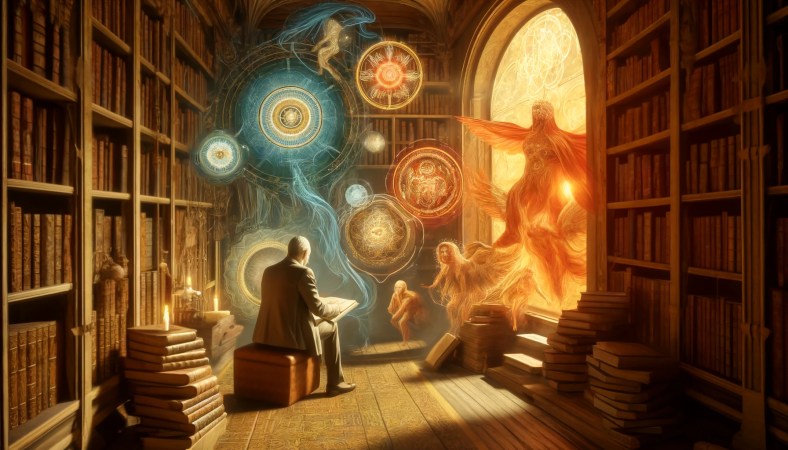
In the vast tapestry of human experience, few tools hold the transformative power of active imagination, as pioneered by the legendary psychologist, Carl Jung. This profound practice offers a gateway into the hidden realms of the psyche, where the conscious and unconscious intertwine, giving rise to profound insights and the potential for profound personal growth.
At its core, active imagination is a conscious engagement with the contents of the unconscious mind. Unlike the passive dreamscape of sleep, where the ego is largely absent, active imagination invites the conscious self to venture into the labyrinth of the inner world, engaging in a dynamic dialogue with the archetypes and energies that dwell within.
As Jung himself described, it is “a dialogue with different parts of yourself that live in the unconscious.” This exchange, which unfolds in the realm of the imagination, allows the individual to confront the hidden aspects of their psyche, those shadowy elements that often elude our day-to-day awareness.
The power of active imagination lies in its ability to bridge the divide between the conscious and the unconscious, giving birth to the “transcendent function” – the synthesis of these opposing forces that Jung saw as essential to the process of individuation, the journey towards wholeness and self-realization.
One of the key advantages of active imagination over more passive forms of fantasy is the level of conscious engagement it requires. As the transcript explains, “the ‘I’ must enter into the imaginative act as intensely as it would if it were an external, physical experience.” This immersive quality ensures that the insights gleaned are not mere intellectual exercises, but genuine revelations rooted in the experiential realm.
Through the practice of active imagination, individuals are empowered to confront the deep-seated conflicts and complexes that may have been lurking in the shadows of their psyche. Rather than passively observing these inner landscapes, the practitioner becomes an active participant, dialoguing with the autonomous figures that emerge from the unconscious.
This dialogue, as the transcript illustrates, can take on both verbal and non-verbal forms, with the individual receiving profound wisdom and guidance from these inner archetypes. Whether it’s the wise elder, the trickster, or the nurturing feminine, each figure represents a unique aspect of the self, waiting to be embraced and integrated.
Yet, the journey of active imagination is not without its challenges. The transcript rightly cautions that the power of the unconscious should not be underestimated, and that the practice should be undertaken with respect, care, and, ideally, the support of a qualified Jungian analyst. The risk of becoming “so totally possessed by the flow of images that they can’t pull out of it” is a very real one, and the practitioner must be prepared to navigate these uncharted waters with courage and discernment.
To this end, the transcript outlines a four-step approach to engaging in active imagination, emphasizing the importance of creating a safe, private space, clearly recording the inner dialogue, and maintaining a balance between the ego’s perspective and the wisdom of the unconscious. By following these guidelines, the individual can embark on a journey of self-discovery that is both profoundly personal and universally resonant.
Ultimately, the practice of active imagination holds the power to transform not only the individual, but the very fabric of our collective reality. As we integrate the insights and energies of the unconscious into our waking lives, we unlock new vistas of understanding and creative potential, empowering us to become conscious co-creators of our personal and collective destinies.
In an age that often prioritizes the rational, the logical, and the material, the teachings of Carl Jung and the practice of active imagination serve as a timely and vital reminder of the inexhaustible depths of the human psyche. By embracing this powerful tool for self-exploration, we open ourselves to the timeless wisdom of the archetypes, the healing balm of the soul, and the limitless possibilities that lie at the heart of our own being.











Add comment