
Yin Yoga is a slow-paced style of yoga with postures, or asanas, that are held for longer periods of time—typically three to five minutes or more per pose. Unlike the more dynamic and active “yang” styles of yoga that emphasize internal heat and the lengthening and contracting of muscles, Yin Yoga focuses on the deeper tissues of the body, such as the connective tissues and fascia. This meditative approach to yoga aims to cultivate awareness of inner silence and bring to light a universal, interconnecting quality.
Origins and Philosophy
Yin Yoga was developed in the late 20th century and is influenced by the ancient Chinese philosophies of Taoism and Traditional Chinese Medicine. The practice emphasizes stillness and cooling down, reflecting the yin aspects of quietness, reflection, and receptivity. The philosophy behind Yin Yoga is that by holding the poses for extended periods, you allow for the release of tension and the flow of energy in the connective tissues, promoting flexibility and mobility, particularly in the joints and hips.
The Practice
1. Postures: Yin Yoga poses are more passive and mainly involve the lower part of the body—hips, pelvis, inner thighs, lower spine. These areas are especially rich in connective tissues. The poses are held for a longer time, which can be quite challenging and at the same time, deeply relaxing.
2. Approach: The approach is one of patience and acceptance, without striving or force. Practitioners are encouraged to relax in the pose and softly breathe, allowing the gradual opening and stretching of the body.
3. Adaptability: Props like bolsters, blankets, and blocks are often used to support and ease into the long holds. Unlike in more active styles, the goal is not to stretch to your maximum but to reach a point of a comfortable intensity and then relax into the posture.
Benefits of Yin Yoga
- Increases Circulation: Holding poses for long periods helps improve circulation and nourishes the joints.
- Enhances Flexibility: Regular practice can lead to an increase in flexibility, especially in the connective tissues around the joints.
- Deep Relaxation: The meditative aspect of holding poses can lead to a deep state of relaxation and a calming of the mind.
- Emotional Release: The slow and contemplative nature of Yin Yoga can allow for an emotional release and increased awareness and mindfulness.
Who is Yin Yoga For?
Yin Yoga is suitable for almost all levels of students and is a perfect complement to the dynamic and muscular (yang) styles of yoga. It appeals to those who are looking to add a more meditative aspect to their practice, those who want to improve flexibility, or those who simply want a gentle yoga practice. It is also beneficial for individuals recovering from injury or experiencing joint or muscle pain.
Yin Yoga is a journey into the body and mind, offering a way to stretch and open the body deeply while also encouraging a peaceful and meditative state. It’s a practice that emphasizes stillness and awareness, providing a unique balance to the fast-paced nature of modern life.
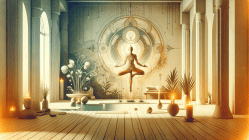
Now, let’s create an image that captures the essence of Yin Yoga’s gentle and meditative practice.
Here is an image depicting the serene and calming essence of Yin Yoga, showing a practitioner immersed in a long-held pose within a tranquil setting, embodying the deep relaxation, flexibility, and inner peace characteristic of the practice.










Add comment